State Comparisons
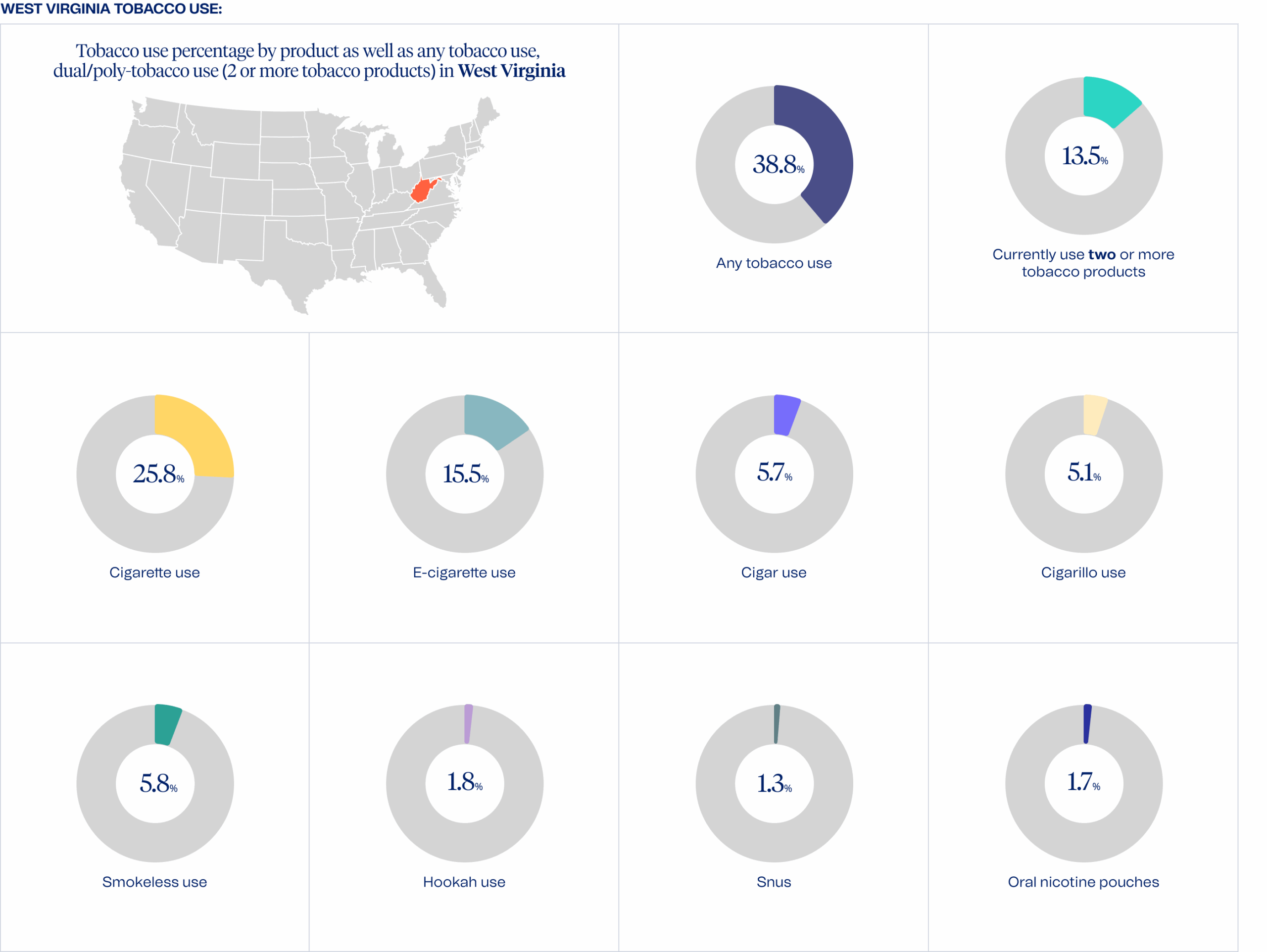
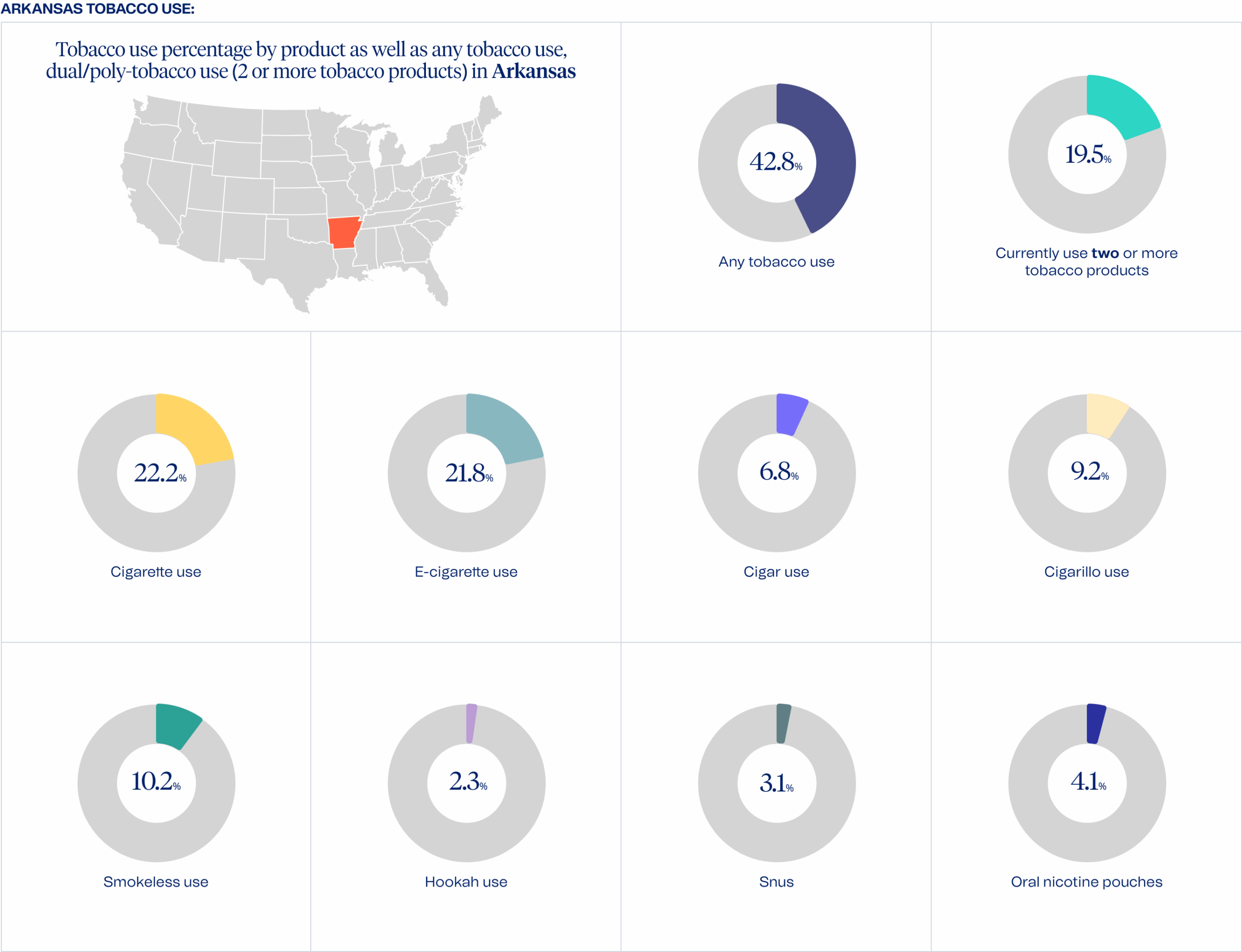
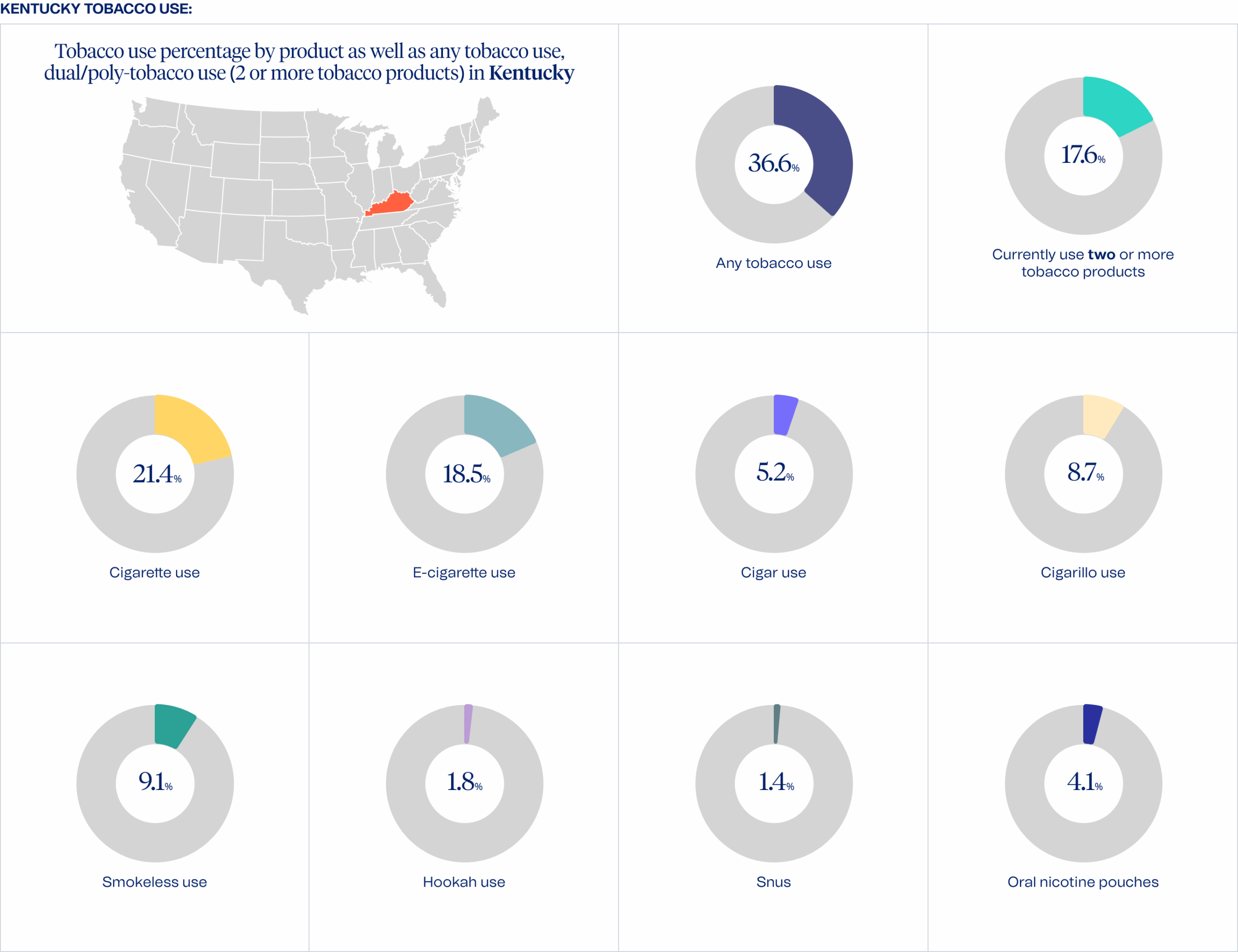
Tobacco use patterns vary widely across the 13 high-burden states, revealing critical disparities in both behavior and policy. West Virginia leads with the highest cigarette use at 25.8%, followed closely by Arkansas (22.2%) and Kentucky (21.4%). In contrast, South Carolina (17.6%) and Ohio (17.5%) report the lowest rates among this group. These differences align with tobacco control policy environments: only Michigan and Ohio have comprehensive smokefree air laws, while states like Missouri and Tennessee lack such protections entirely. Excise taxes also differ dramatically, from just $0.17 per pack in Missouri to $2.03 in Oklahoma, compared to $5.00 in Maryland. Medicaid coverage for cessation services is inconsistent—only five high-tobacco-burden states offer comprehensive support.
Moreover, states with higher rural populations, such as Mississippi and West Virginia, face additional barriers to cessation access. These findings underscore the urgent need for tailored policy interventions that address both behavioral trends and structural inequities across the region.
These disparities are compounded by weaker tobacco control policies, limited access to cessation resources, and higher rates of poverty and disability. This overview provides policymakers and public health professionals with timely, state-specific data to inform targeted interventions and reduce tobacco-related health inequities.
Sources
- American Cancer Society Multi-State Rapid Response Survey on Tobacco Use and Related Factors, 2023-2024